Nature does the farming. We just lend her a hand.
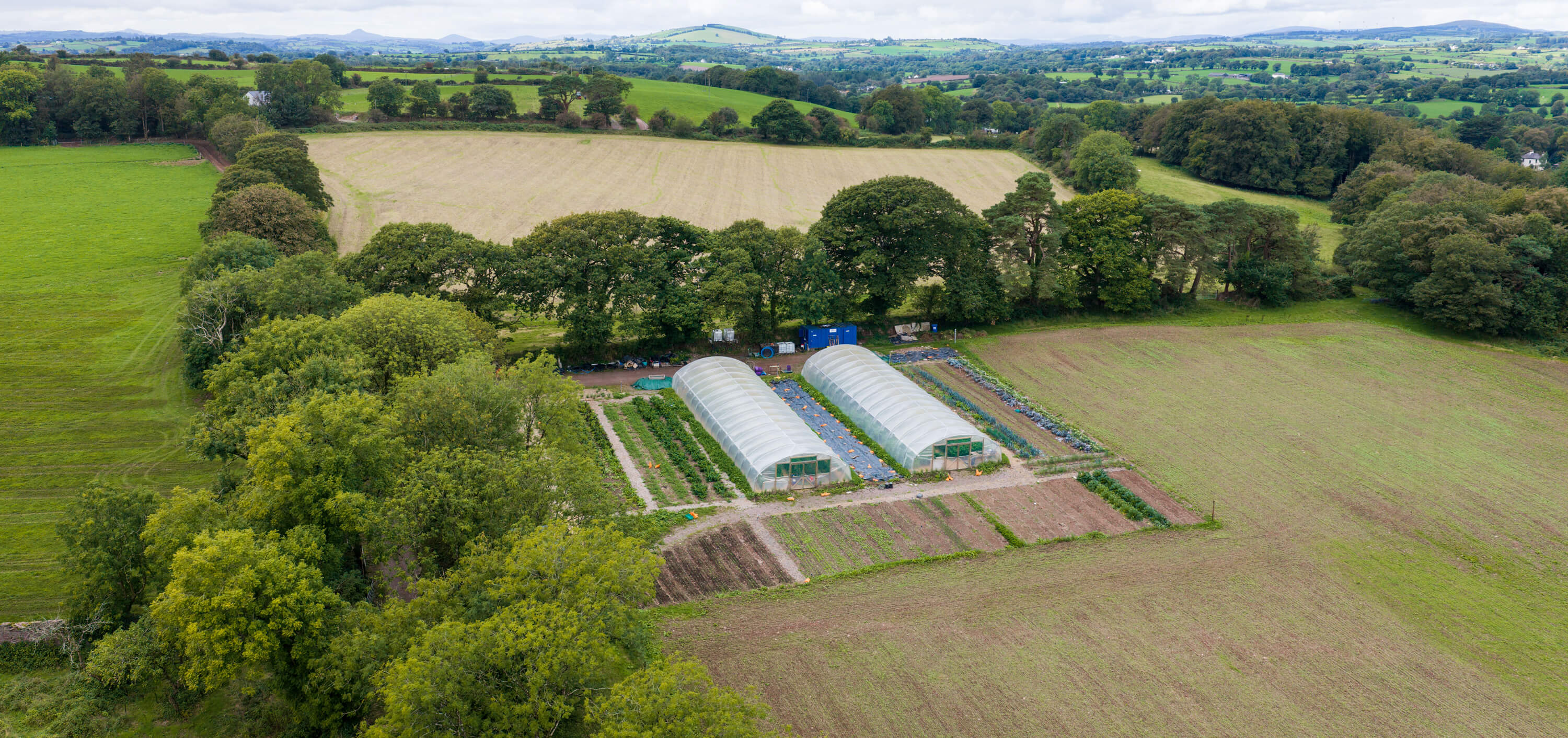
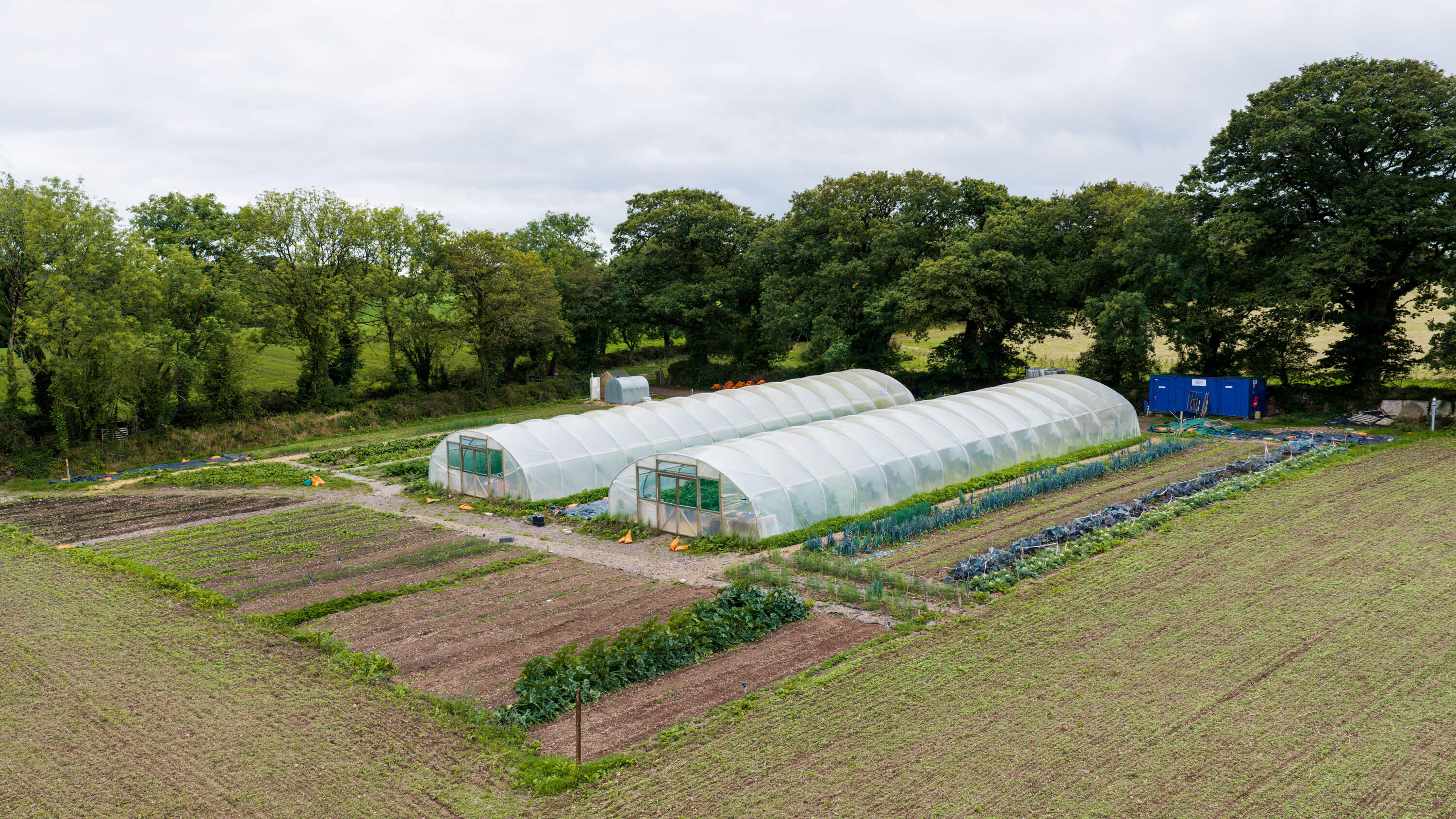
Forty-five acres of certified organic pasture, orchard and market garden, farmed on organic principles, natural farming techniques and permaculture influences - fed by compost and cover crops, protected by ladybirds and hoverflies, and pollinated by the estate's own colonies of Irish Black Bees.
Certified organic land, farmed without chemical inputs.
45 of the estate's one hundred and ten acres are certified organic: permanent pasture, a walled heritage orchard and a market garden, certified through the Organic Trust and member of Organic Growers Ireland. The remaining acreage is in woodland and river corridor.
Fertility is built - clover leys, farmyard manure, organic compost and rotation, following organic principles, natural farming techniques and permaculture practices. Inspection is annual and unannounced spot checks apply.
Produce is grown for local traders; surplus is sold to trade buyers in Cork and Munster. Volumes and availability are recorded by crop and season.
Fertility built on site.
Nothing synthetic goes on the ground here. Fertility comes from the farm itself: composted manure sourced locally, indigenous microorganisms cultured on site and a rotation of fertility cover crops - clover, mustard, and phacelia - grown to feed the soil rather than to be harvested. Minerals or pest control supplementation is sourced from organic providers to ensure the soil is given everything it needs to thrive. Cover crops fix nitrogen, suppress weeds, and are grazed or mulched back in ahead of the next planting.
Natural pest control. No pesticide is used on the certified ground. Ladybirds, nematodes, hoverflies and ground beetles do that work instead, helped along by flowering margins and hedgerow left uncut through the season so they have somewhere to overwinter.
On-site pollinators. The estate keeps its own beehives - a mix of native Irish Black Bees and hybrid swarms that have settled here on their own - working the orchard, walled garden and wildflower margins.
A hydroelectric estate, since 1925.
The turbine was installed c.1925 to drive the woollen mill on the Dripsey below the castle. The mill closed; the turbine didn't. The weir itself predates 1842, and still feeds the same run-of-river system today, powering the farm buildings, walled garden, accommodation and event spaces.
Listed on the Cork County Record of Protected Structures.
Entered in the Record of Monuments and Places for County Cork.
Surveyed by the National Inventory of Architectural Heritage.
Sustainability, in the specific.
Six standing practices, each with a rule attached rather than an aspiration.
Beds are rotated on a four-year cycle with clover leys and composted farmyard manure. Organic matter is tested every third year and the result is recorded.
When we are cooking on the estate, the market garden comes first. Whatever is ready is picked that morning, and the menu is shaped around it.
The turbine carries the estate's base load, with the grid as backup rather than supply.
Every working space on the estate is an existing structure brought back into use. Nothing has been demolished to make room for new buildings.
Stock is fenced off the river along its full length within the estate. Nothing is applied within the buffer and yard runoff is settled before it reaches the channel.
Hedge-laying, lime work and turbine maintenance are done by people who know the estate. Where a trade is bought in, it is taught on.
FAQ
No. Forty-five acres are certified: pasture, orchard and market garden. The remaining sixty-five acres are woodland and river corridor, which are managed but not cropped and so are not part of the certified area.
It covers the farm buildings, walled garden, accommodation and event spaces. The grid connection remains in place as backup for low-flow periods; there is no fossil-fuel generation on site.
Events run on turbine power in existing buildings, with catering drawn from the market garden in season. No temporary generation is brought in and no new structures are built for events.
Continuous cover, no clear-felling. Standing deadwood is retained where safe, and thinnings are used on the estate for fencing, firewood and repairs rather than sold on.
It is a working farm, so access is by arrangement. Assessors, buyers and press are shown the certified ground, the turbine house and the weir; guests can walk the woodland paths and orchard.
Producers, buyers, press and partners.
For certification documents, current crop availability, site visits or assessment access, write to the estate office. Requests are answered within two working days.
Enquire